
When an aircraft goes AOG, the objective is straightforward: return it to service as quickly and safely as possible. The challenge is that the repair itself is often only one part of the recovery process.
For Maintenance Control, Materials teams and AOG Buyers, the first question is rarely, “How do we move the part?” More often, it is, ” Where is the nearest ready-to-ship part that minimises our total transit window? ”
During seasonal capacity peaks, that distinction becomes increasingly important. Components may be available from multiple locations, including another maintenance base, an MRO, an OEM or another airline. The closest part is not always the quickest to install. Release procedures, customs requirements, transport availability and engineering schedules can all influence the overall recovery timeline.
Research published in Applied Sciences identifies spare parts availability and logistics coordination as significant contributors to AOG recovery time, demonstrating that sourcing and moving the right component can have as much influence on aircraft downtime as the maintenance activity itself.
AOG Recovery Time Is Determined by Decisions, Not Distance
Every AOG recovery involves a series of operational decisions. Should a replacement unit be collected from an OEM, borrowed from another operator or repositioned from an existing inventory location? Is the fastest solution an onboard courier, the next available flight or dedicated road transport? Will customs clearance delay the shipment more than the journey itself?
These decisions are made under considerable time pressure, often while Operations is assessing schedule disruption and engineering teams are preparing to receive the component.
This is where specialist AOG logistics providers add value beyond transportation. Evolution Time Critical works directly with airlines, MROs, OEMs and approved suppliers to coordinate collections, evaluate transport options and manage the movement of aircraft components. The objective is not simply to move a shipment quickly, but to support the recovery strategy that delivers the earliest possible return to service.
Visibility Enables Better Operational Decisions
For Maintenance Control, knowing where a shipment is can be as important as knowing when it will arrive.
Accurate shipment visibility allows engineering resources to be planned, maintenance slots to be allocated and Operations to make informed decisions about aircraft recovery. Without reliable updates, uncertainty increases across the recovery process, even when the shipment remains on schedule.
Evolution Time Critical provides continuous monitoring and proactive operational updates throughout each movement, giving Maintenance Control and Materials teams the information needed to coordinate the next stages of the recovery rather than waiting for the component to arrive before making operational decisions.
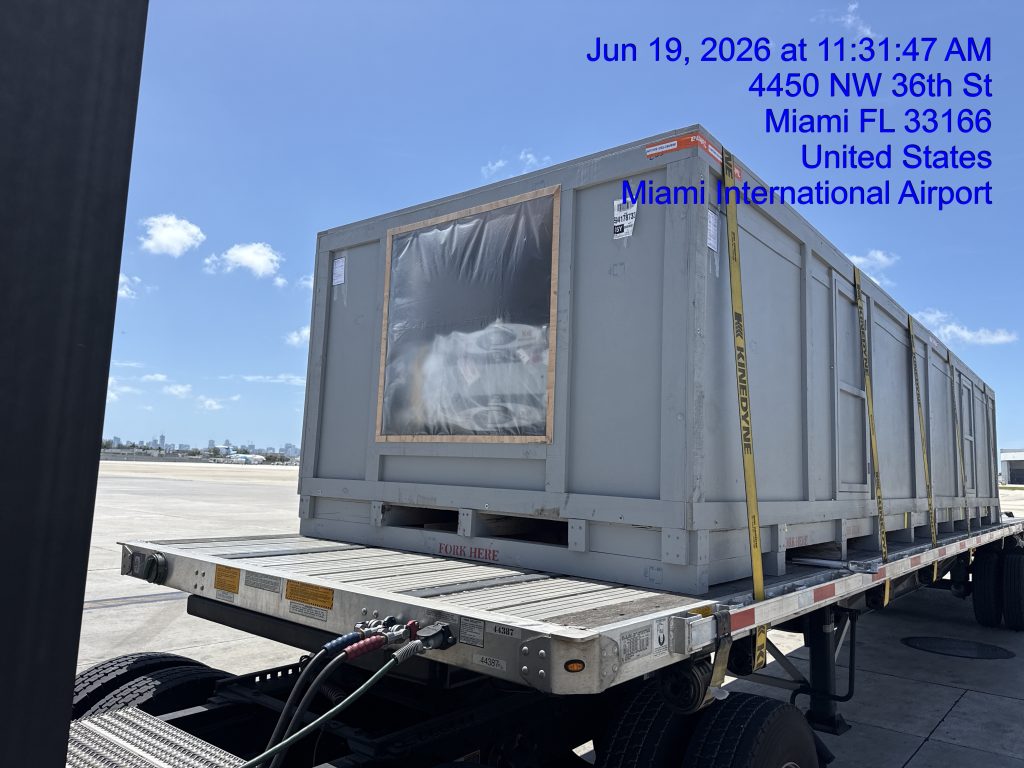
Seasonal Capacity Increases the Value of Preparation
Peak operating periods do not necessarily generate more AOG events, but they leave less room to absorb them. Alternative aircraft may be unavailable, inventory may already be committed elsewhere, and transport networks are often operating at higher utilisation.
IATA continues to identify supply chain performance as one of the aviation industry’s most significant operational challenges, with parts shortages and aircraft delivery delays increasing maintenance costs and placing additional pressure on airline operations.
In these conditions, successful AOG recovery depends on preparation. Established supplier relationships, access to distributed inventories and logistics partners capable of responding immediately all contribute to reducing aircraft downtime.
Evolution Time Critical supports this approach through 24/7 AOG logistics services, including onboard courier (OBC), next-flight-out (NFO), dedicated vehicle transport, direct collections and customs coordination, all on a global scale. Working as an extension of airline Maintenance Control and Materials teams, Evolution helps ensure certified components, tooling and equipment move quickly and compliantly between suppliers, MROs and airports, allowing maintenance activities to begin at the earliest opportunity.
Ultimately, the success of an AOG recovery is rarely measured by how quickly a shipment moved. It is measured by how quickly the aircraft returned to service. Achieving that outcome requires coordinated decision-making across Maintenance Control, Materials, engineering and logistics, with every stage of the recovery process aligned around a single objective: minimising aircraft downtime through seamless, real-time collaboration.
If you would like to find out more on how we support AOG recovery contact our specialist team at: aog@evolution-timecritical.us


